Book Review: Fantastic Numbers and Where to Find them
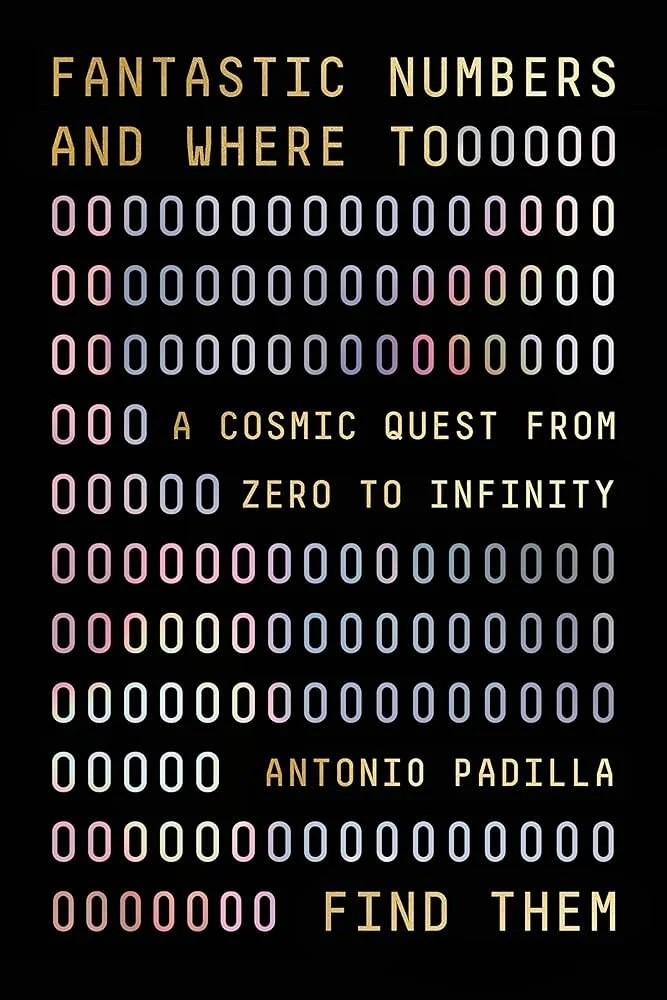
You will be forgiven for misunderstanding what math is. You learned it wrong. You learned that math is numbers. The numbers have a proper order and you called it counting. The numbers can be combined with special symbols and you called it adding, then subtracting, multiplying, and dividing. Then you learned that it involves shapes for some reason, and those shapes have some numbers that describe them and you can add, subtract, multiply and divide the shapes by accepting that the shapes and numbers are the same thing. Then you learned to use letters instead of numbers, and to pretend that the letters were just a placeholder for the numbers. If you're lucky, you learned how to describe the shapes with letters and complex equations. Maybe you learned about imaginary numbers, or infinity, or shapes with more than three dimensions and it all seemed very disconnected with anything going on in reality. You accidentally learned that beyond a certain point, math doesn’t have much of an impact on your life.
To correct your pedagogy, Antonio Padilla will meet you where you're at and accept the premise that math is numbers. He has presented a selection of them for your edification.
You will notice that this math book doesn't seem to have a lot of math in it. The first chapter focuses on Usain Bolt's record setting one hundred meter sprint from the perspective of his parents sitting in the stands. It features only a handful of numbers and even fewer calculations. Much of it is context to help you understand what the math has to say. He walks you through Einstein's theory of relativity and the equations that were derived from a simple idea: light always moves at the same speed. If you can accept that idea, he confronts you with the inevitable consequences that quite literally shift the fabric of the universe. Time speeds up and distances contract. Bolt’s run is even more monumental than it first appears. In the process of describing that completely and with certainty, you are doing math. The numbers are just a tool.
In Padilla's subtext, you'll get a glimpse of what teachers should have taught you. Math is the language of what must be true. It will not claim inherent truth, but it will grab you by the ears and force you to reckon the repercussions of whatever axioms you choose to accept. Padilla has domesticated this beast and broken off a bite sized chunk of one of the biggest ideas in physics for you to consume.
Over the next 200 pages, he pulls the same trick over and over but in new and interesting ways, reminding you that math is not just numbers. It is visceral and integral to grappling with the nearly impossible realities obscured in the universe, and in any universe you can imagine.
Five stars.